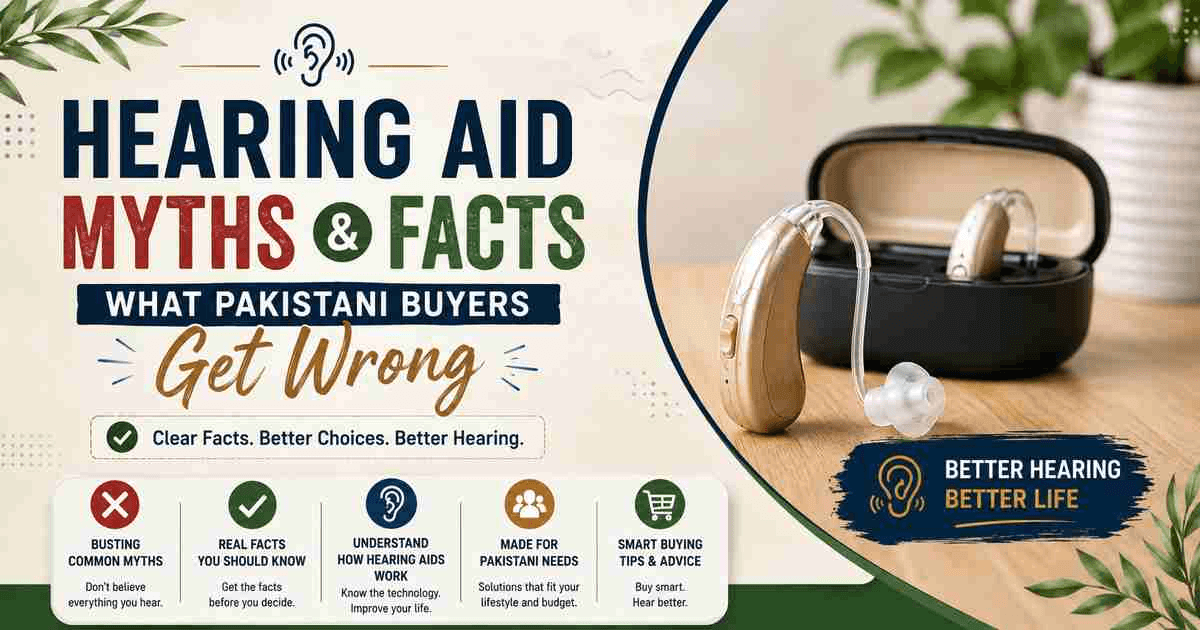
Hearing Aid Myths and Facts: What Pakistani Buyers Get Wrong
Medically reviewed by a licensed audiologist on the KunShop.pk Health & Personal Care panel. This article is for general information only and doesn’t replace a professional hearing evaluation.
Somebody’s uncle swears hearing aids “ruin your ears if you use them too long.” A neighbor insists you should only get one if you’re above 60. Half the advice floating around Pakistan on this topic comes from WhatsApp forwards, not audiologists — and it’s kept a lot of people who genuinely need help away from getting it. The WHO estimates over a billion people worldwide live with some degree of disabling hearing loss. Plenty of them could be helped by a hearing aid. Many aren’t using one, and misinformation is a big part of why.
So let’s actually sort this out. What’s true, what’s outdated, and what you should know before spending your money on a device that either does too little or gets returned in a month because nobody explained how it works.
Quick Answer: Myths and Facts at a Glance
Hearing aids don’t damage your hearing further, in general. They don’t bring hearing back to “normal” either — that’s not really what they’re built to do. They’re also not just for older people, and paying more doesn’t automatically mean a better fit for your ears specifically. What actually moves the needle: a real hearing test, picking a device type that suits how you live day to day, and giving yourself a few weeks to adjust before deciding it’s not working.
How Hearing Aids Actually Work
Here’s the thing people miss — a hearing aid isn’t a volume knob. It’s a small computer that sits in or behind your ear, picks up sound through a microphone, processes it, and pushes out a version that’s clearer and easier for your brain to make sense of.
Modern digital hearing aids do more than just make things louder. Many separate speech from background noise reasonably well, adjust themselves depending on where you are, and cut down on the whistling feedback that older analog aids were famous for. Some rechargeable models even pair with an app on your phone, so you can tweak settings yourself instead of driving back to the clinic every time. That said, getting an audiologist to fine-tune things properly still tends to give better results than doing it all yourself.
Once you understand this, a lot of the myths make more sense — because most of them were true, decades ago, about a completely different kind of device.
Common Hearing Aid Myths in Pakistan — Debunked
Myth: Hearing Aids Restore Normal Hearing
Probably the biggest one. Think of a hearing aid more like glasses than a cure — it sharpens what you can hear, it doesn’t undo the hearing loss itself. People who expect their ears to go back to exactly how they were before often end up frustrated. Not because the device failed. Because the expectation was wrong from the start. A fairer goal: noticeably clearer speech and less strain trying to follow a conversation. That’s exactly the kind of realistic improvement devices like the Axon – B 13 – Ear Hearing are built to deliver — sharper, cleaner sound, not a reversal of hearing loss.
Myth: Hearing Aids Damage Your Hearing Further
New users often say their hearing feels worse the moment they take the device off. What’s usually going on is the brain had quietly adjusted to less sound over months or years, and pulling the aid off just makes that gap obvious again by comparison. A properly fitted device, adjusted by someone qualified, isn’t meant to cause more damage. If something genuinely feels off, that’s a conversation for your audiologist, not a forum.
Myth: You’ll Become Dependent on Hearing Aids
The worry here is that your ears get “lazy” and stop working on their own. That’s not really how it works. The device isn’t doing your ears’ job for them — it’s giving your auditory nerves more consistent input, which some research suggests may actually support hearing health over time (results vary person to person). And if you stop wearing it? You’re not worse off. You just go back to hearing at your original, unaided level.
Myth: Only Elderly People Need Hearing Aids
Hearing loss doesn’t check your ID card. Noise exposure, infections, genetics, years of loud headphones — any of these can bring it on at 25 just as easily as 70. Younger buyers in Pakistan are showing up for hearing tests more than before, and manufacturers have responded with smaller, less noticeable in-ear styles built with exactly that group in mind, like the X-168 Tone Adjustable Hearing Aids.
Myth: Expensive Hearing Aids Are Always Better
More money usually buys more features — better noise handling, Bluetooth, rechargeable batteries. But “better” only counts if you’ll actually use those features. Someone with mild hearing loss who mostly needs help in one-on-one, quiet settings might do just fine with something mid-range. Someone who spends their day in a noisy market or office probably gets more real value out of the advanced processing.
Myth: One Hearing Aid Type Fits Everyone
No two ears — or two hearing losses — are quite the same. A device that’s great for someone with moderate loss might do nothing for someone with severe loss. That’s exactly why hearing aids come in different styles and power levels instead of one universal design trying to cover everybody — a BTE hearing aid like the Axon B-13 rated up to 130dB, for instance, is built specifically for more severe hearing loss.
Myth: You Don’t Need a Hearing Test Before Buying
Would you buy prescription glasses without an eye test? Same logic here. Without knowing the exact shape of your hearing loss, there’s really no reliable way to know which device or setting is going to help you specifically. This is one place where skipping the professional step almost always costs more later.
Hearing Aid Facts Pakistani Buyers Should Know
- Hearing aids can meaningfully improve speech clarity and cut down listening fatigue for a lot of users, though how much varies by person and degree of loss.
- Digital hearing aids process sound in real time and are generally better at separating speech from background noise than the old analog models.
- Rechargeable hearing aids have made life easier for people tired of replacing tiny disposable batteries every week.
- A properly fitted device usually feels more comfortable after the first few weeks, once your ears and brain settle into it.
- Regular cleaning and periodic check-ups tend to help hearing aids last longer and keep performing well.
Benefits and Limitations: What to Realistically Expect
There’s real value here — following a conversation at a family gathering without asking “sorry, what?” three times, catching a phone call clearly, not being mentally drained by the end of the day from straining to hear. Plenty of users say that fatigue drops noticeably once they’ve adjusted.
But it helps to be honest about the ceiling too. A hearing aid amplifies and clarifies — it doesn’t recreate hearing exactly as it was before any loss started, especially with severe or profound cases. It works best paired with patience during the adjustment weeks and the occasional visit back to an audiologist.
How to Choose a Hearing Aid in Pakistan
Behind-the-Ear vs In-Ear:
Behind-the-ear models sit over the ear with a thin tube running into the canal — generally easier to handle if dexterity is an issue. In-ear devices sit inside the canal itself, more discreet to look at, but they usually need a steadier hand when putting them in or taking them out.
Rechargeable vs Battery-Powered:
Rechargeable hearing aids have grown popular for good reason — no more fumbling with tiny batteries. Battery-powered models are still a solid, often cheaper choice, especially if you want a simple backup option while traveling.
Get the Hearing Test First:
An audiologist’s hearing test tells you the type and degree of loss you’re dealing with before you even start comparing devices. Skip this, and you’re basically guessing — which is how a lot of people end up with a hearing aid that doesn’t match what they actually need.
Hearing Aid Price in Pakistan: What Affects the Cost
Prices swing depending on brand, tech level, and extras like Bluetooth or automatic noise reduction. Basic digital models sit toward the affordable end; premium rechargeable, app-connected devices cost a fair bit more. Rather than grabbing the cheapest or the flashiest, it’s usually smarter to match your budget to your actual hearing loss — something a hearing test will tell you. On kunshop.pk, prices generally range from Rs. 2,000 to Rs. 6,000 depending on the model, though exact numbers shift with ongoing offers, so it’s worth checking the current listing with your chosen seller.
Adjusting to Your Hearing Aid: The First Few Weeks
It’s completely normal for a new device to feel a little strange at first — voices, traffic, even your own footsteps might sound oddly loud or unfamiliar for a few days. Most people settle in somewhere between two and four weeks of regular use, though this timeline isn’t identical for everyone. Wearing it consistently, instead of only for an hour here and there, tends to speed the whole process up.
Hearing Aid Maintenance and Care Tips
- Wipe the device down daily with a soft, dry cloth to clear off earwax and moisture.
- Keep it in a ventilated case overnight — skip the sealed pouch.
- Change or recharge the battery as recommended so it doesn’t die on you mid-conversation.
- Book periodic check-ups so an audiologist can fine-tune the settings as your hearing changes.
- Keep it away from heat, water, and dust as much as you reasonably can.
Quick Buying Checklist Before You Buy
- Get a proper hearing test before you even look at specific models.
- Pick behind-the-ear or in-ear based on comfort and how steady your hands are.
- Decide rechargeable vs battery-powered based on your actual daily routine.
- Set a budget around your real degree of hearing loss, not just brand hype.
- Confirm the warranty and after-sales fitting support before you pay.
Pros and Cons of Hearing Aids
The upside is real — clearer speech, less mental strain, more comfortable participation in conversations you’d otherwise have half-followed. The downside is that there’s an adjustment period, some ongoing upkeep, and a need to keep expectations grounded in what amplification can actually do. Matching the device to your real needs matters a lot more than chasing the newest, most expensive model on the shelf.
Buying With Confidence: Why the Source Matters
A hearing aid is a health device, so where you buy it matters nearly as much as which one you pick. Look for sellers offering genuine, certified devices, clear warranty terms, and support if adjustments are needed later — not just the lowest price you can find. On kunshop.pk, hearing aids are listed under the Health & Personal Care category with warranty details and support contact info on each product page, and that’s a standard worth checking with any seller, not just this one.
Frequently Asked Questions
Do hearing aids restore normal hearing?
No. They amplify and clarify sound, but they generally don’t reverse hearing loss or bring it back to exactly how it was.
Can hearing aids make hearing worse over time?
Properly fitted ones aren’t designed to cause extra damage. That “worse” feeling without the device is usually your brain adjusting, not new harm — though any new symptom is worth mentioning to an audiologist.
How long does it take to adjust to a hearing aid?
Typically two to four weeks with consistent daily use, though it depends on the person and the degree of hearing loss.
Can I buy one without getting a hearing test first?
Not a great idea. The test tells you the type and severity of your hearing loss, which is basically what the whole device selection is built around.
Are expensive hearing aids always the better pick?
Not necessarily. Extra cost usually buys extra features, but whether those features actually matter comes down to your specific hearing loss and daily life, not the price tag alone.
Conclusion
Most hearing aid myths in Pakistan trace back to old analog devices or a misunderstanding of how the modern digital ones actually work. Once you separate fact from assumption, the path forward is pretty simple: get tested, pick a device type that fits how you actually live, and give yourself time to adjust before judging it. If you’re ready to start comparing, kunshop.pk carries a Hearing Aids range under Beauty & Cosmetics with genuine products and support behind them — though a proper hearing test with a certified audiologist should still come first.