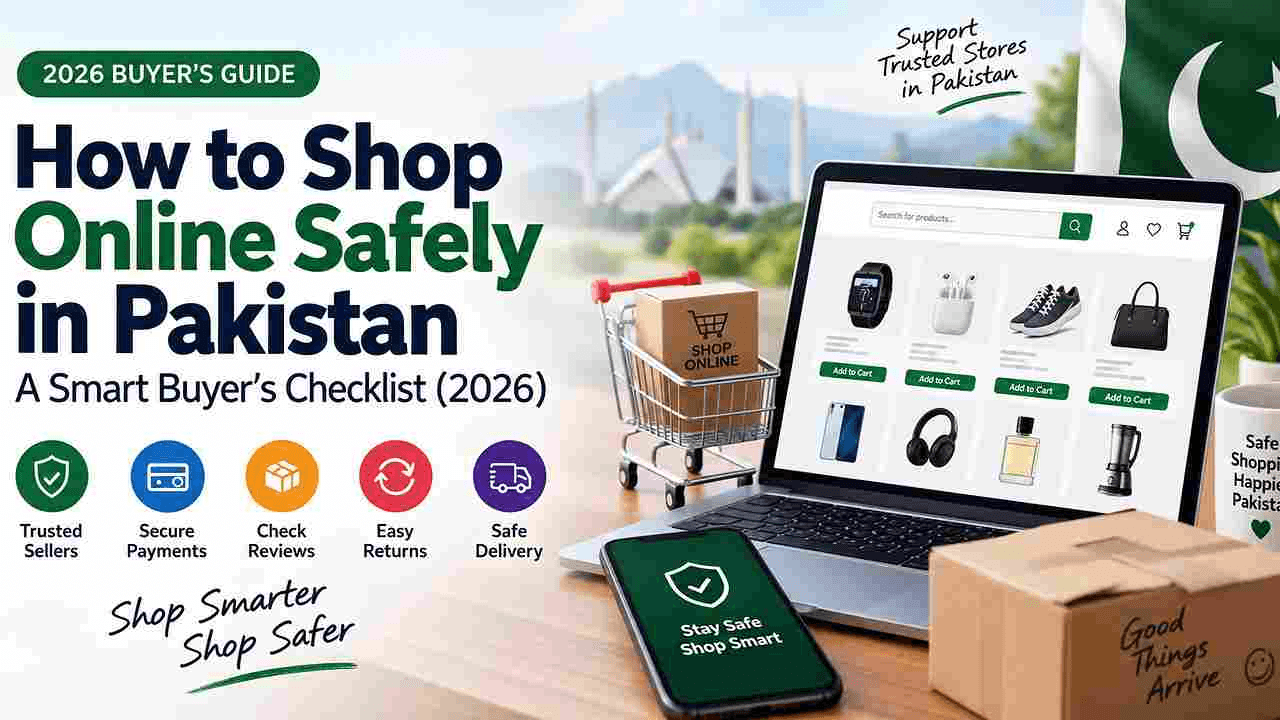
How to Shop Online Safely in Pakistan: A Smart Buyer’s Checklist (2026)
Reviewed by the KunShop.pk Editorial Team
More people in Pakistan are buying online than ever before, and unfortunately, that growth has dragged along fake websites, unverified sellers, and buyers who’ve lost money to scams that a few basic checks could have caught. Shop Online Safely in Pakistan isn’t some technical skill you need a course for. It’s a handful of habits — checking who you’re actually buying from, picking the right payment method, and knowing what a real store’s checkout and delivery process is supposed to look like. That’s what this guide walks through, along with the red flags that tell you when a store isn’t what it claims to be.
Quick Answer
If a store has a working phone number, a real business address, HTTPS with a valid SSL certificate at checkout, a written return policy, and reviews you can find somewhere other than its own website — it’s probably fine to buy from. If two or more of those are missing, slow down before you pay.
Why Online Shopping Safety Matters More in Pakistan Right Now:
Online shopping here has grown well past a handful of big names. New stores pop up every month in Lahore, Karachi, Islamabad — and plenty of them haven’t built the same trust systems the older, established sellers have. Digital payments are catching on too, alongside cash on delivery, so buyers now have two different risk profiles to think through instead of one. A store can look sharp and professional on the surface and still be missing a return policy, a real support line, or basic checkout security. That gap usually only shows up after something’s already gone wrong.
How to Verify a Trustworthy Online Shopping Website:
Two minutes of checking before you hand over any personal or card details can save you a lot of grief later. Genuine sellers tend to share a few traits: a registered business name, a real office or address, and a support number someone actually picks up.
Checking Site Security, Reviews & Business Details:
Look for HTTPS and the padlock icon before typing in any payment details — if it’s missing on a checkout page, that alone is a clear warning sign. An SSL certificate encrypts the connection between your browser and the store’s server, and that matters most at the exact moment you’re entering card numbers. A store that skips this basic layer of security isn’t one worth trusting with sensitive information, no matter how good the product photos look.
Reading Customer & Product Reviews Beyond the Store’s Own Page:
Reviews sitting only on a seller’s own site can be cherry-picked, so search the store’s name alongside words like “reviews,” “complaint,” or “scam” and see what independent buyers actually say. Comment sections under a store’s own social posts often reveal delivery delays or quality problems faster than any polished testimonials page. Even a small handful of unresolved complaints tells you more than a wall of vague five-star reviews.
Verifying Contact Information & Business Details:
A legitimate store lists a working phone number, an email, and ideally a physical location — not just a contact form that swallows your message and never replies. Try calling before placing a big order. A seller who avoids voice contact entirely is much harder to hold accountable if things go sideways. Details like a registered business name or a CNIC-verified seller account (common on marketplaces) add a layer of protection a random Instagram shop usually can’t match.
Understanding Payment Methods (COD vs Online Payment)
COD online shopping in Pakistan is still the safer bet for a first order with a seller you don’t know, since you get to inspect the parcel before any money leaves your hand. Card or wallet payments are quicker and sometimes come with a discount, but stick to stores that use a recognized payment gateway and have already earned some trust. Turning on transaction alerts for your bank account is a small habit that catches unauthorized charges in minutes rather than weeks.
Don’t share an OTP, card PIN, or full card number with a seller over a call or chat — no real checkout process ever needs that outside its own secure payment page. A strong, unique password on your shopping account matters more than most people think, since reused passwords are exactly how scammers get into saved payment details across multiple sites.
Delivery, Tracking & Parcel Inspection: What a Reliable Store Offers
A store worth trusting sends an order confirmation right away and a tracking number the moment the parcel ships, so you’re never guessing where things stand. Delivery windows shouldn’t be vague either — a reliable seller commits to a specific number of working days and tells you if something’s delayed. If the tracking link stops updating or the courier goes quiet for a day or two, that’s your cue to reach out to support directly instead of waiting it out.
Parcel inspection matters too, especially on cash-on-delivery orders. Where the courier allows it, open the package in front of the rider — it protects you from ending up with a damaged, wrong, or incomplete item after you’ve already paid. Watch for hidden charges as well: an unexpected delivery fee or “processing charge” tacked on at the last step is worth catching before you confirm the order, not after the rider’s already at your door.
Understanding Return, Refund & Privacy Policies:
Read the return policy before you order, not after something goes wrong. A written, time-bound policy — say, a clear 7-day return window — tells you the seller has actually thought through what happens when things don’t go as planned. A vague “contact us for issues” line, with no timeframe or process spelled out, usually means refunds get decided case by case, and not always in your favor.
The privacy policy deserves a look too, even though almost nobody reads it. It should say how your personal and card details are stored, whether they’re shared with anyone else, and how long that data sticks around. Stores that skip a privacy policy altogether are often the same ones skipping a real return policy — the two tend to travel together.
Common Online Shopping Scams in Pakistan and How to Avoid Them
- Fake product listings: Photos lifted from other websites, advertising items the seller never actually stocks.
- Counterfeit products: Branded-looking goods sold at prices too good to be true, with zero proof of authenticity.
- Advance-payment-only demands: Sellers who refuse COD and insist on full payment before anything ships.
- Phishing messages: Fake “order confirmation” or “delivery failed” texts pushing you to click a link and re-enter card details.
- Disappearing customer support: A seller who’s responsive right up until you actually have a problem.
Buying Guide: Step-by-Step Checklist Before You Place an Order
Here’s a pattern that comes up a lot: a store runs heavily discounted electronics ads on social media, with no real website — just a WhatsApp number for orders. Buyers who paid upfront often found that number dead within days. Buyers who insisted on cash on delivery walked away with nothing lost. It’s a simple example, but it shows exactly why payment method and seller verification matter more than whatever price is flashing on the ad.
Buying Guide: Step-by-Step Checklist Before You Place an Order
Confirm the seller has a working contact number, a stated address, and HTTPS on the checkout page. Search for independent reviews and compare the delivery timeline against what similar sellers usually promise for that same type of product. Go with cash on delivery for a first order with any new store, inspect the parcel if the courier lets you, and hold onto the order confirmation and tracking number until you’ve checked the item and accepted it. The same checklist applies whether you’re buying something small or something more feature-heavy — our Smart Watch Buying Guide covers the same kind of verification for that specific category.
Weighing the Pros and Cons of Shop Online Safely in Pakistan:
Online shopping saves time, opens up a much wider selection than most physical markets, and increasingly gives you the option of COD, which takes a lot of the upfront risk off the table. Comparing prices gets easier too — checking two or three stores takes minutes instead of an afternoon crossing the city. But there are real trade-offs: delivery can run late, what arrives doesn’t always match the photos, and verifying a seller properly takes effort most people skip until something goes wrong.
Expert Tips for Long-Term Buyer Protection:
Screenshot product listings, prices, and anything a seller promises you in chat before you pay — it comes in handy if a dispute pops up later. Stick with a small circle of stores you’ve already vetted instead of chasing the lowest price across sellers you’ve never heard of. Check your bank or wallet statement once a month for charges you don’t recognize; it’s a small habit that catches fraud early, before it turns into a bigger mess. The same mindset applies even to smaller purchases — a guide like Best Perfumes for Men Under Rs. 3,000 in Pakistan is only useful if you’re buying from a seller you’ve already checked out.
Why KunShop.pk Follows These Safety Standards:
KunShop.pk runs on the exact same checks buyers should look for anywhere: nationwide COD, a 7-day return window, tracked shipping with SMS updates, and WhatsApp or call support that actually answers. Browse our Mobile & Computer Accessories range or our Beauty & Cosmetics collection and you’ll find the same seller-verification and checkout-security standards applied across every category. That’s also why KunShop.pk puts delivery charges, return terms, and contact details right on the product page instead of burying them somewhere buyers have to dig for.
Quick Buying Checklist:
- Verify contact details: A working phone number and a real business address before you order anything.
- Confirm secure checkout: HTTPS, a valid SSL certificate, and a recognized payment gateway at the checkout page.
- Read the return and privacy policy: A clear, time-bound refund process and honest terms on data handling.
- Prefer COD for new sellers: Pay on delivery until a store’s earned your trust through past orders.
- Keep records: Hold onto the order confirmation, tracking number, and any seller chat until delivery’s confirmed.
Frequently Asked Questions
How can I shop online safely in Pakistan?
Check the seller’s contact details and return policy, use HTTPS-secured checkout, and go with cash on delivery for your first order with any new store.
How do I know if an online store is genuine?
Look for reviews outside the store’s own page, a support number that actually works, and a clearly written refund and privacy policy.
Is cash on delivery safer for online shopping?
Generally, yes — COD lets you inspect the parcel before paying, though it won’t fully protect you from things like a wrong or damaged item.
Should I share my OTP or card PIN with an online seller?
No. A real seller never needs your OTP, card PIN, or full card number outside of their own secure checkout page.
What should I do if I suspect an online store is fraudulent?
Stop the payment if you still can, call your bank right away if money’s already gone through, and report the store to the relevant consumer protection or cybercrime channel.
Conclusion
Shop Online Safely in Pakistan really comes down to a short list of habits, repeated every time: check the seller, lean toward payment methods you can reverse, and read the return policy before checkout instead of after. Stores that make this easy to find — the way category pages on KunShop.pk lay out delivery, returns, and contact details upfront — tend to be the ones worth going back to. A few extra minutes now is a small price for skipping a much bigger headache later.
Ready to shop with confidence? Browse verified categories on KunShop.pk today, backed by nationwide COD, tracked delivery, and 7-day returns.
Top Sellers
-
Sale!

Men’s Spider Hoodie
₨ 4,500Original price was: ₨ 4,500.₨ 2,899Current price is: ₨ 2,899. -
Sale!

Pack of 2 Men’s Sweatshirts
₨ 6,000Original price was: ₨ 6,000.₨ 3,499Current price is: ₨ 3,499. -
Sale!
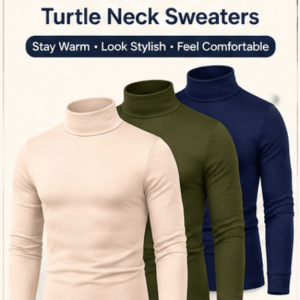
Pack of 3 Men’s High Neck Sweaters
₨ 5,500Original price was: ₨ 5,500.₨ 3,499Current price is: ₨ 3,499. -
Sale!

Pack of 3 Men’s Round Neck Sweater
₨ 6,500Original price was: ₨ 6,500.₨ 4,800Current price is: ₨ 4,800. -
Men’s Round Neck Sweater
-
Sale!
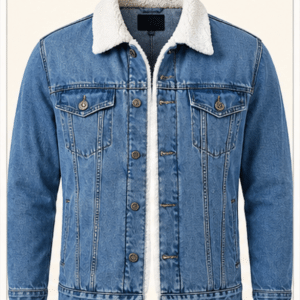
Men’s Blue Sherpa Denim Jacket
₨ 8,000Original price was: ₨ 8,000.₨ 4,499Current price is: ₨ 4,499. -
Sale!

Pack of 2 Nike Plain Men’s Hoodies
₨ 6,700Original price was: ₨ 6,700.₨ 4,499Current price is: ₨ 4,499. -
Sale!
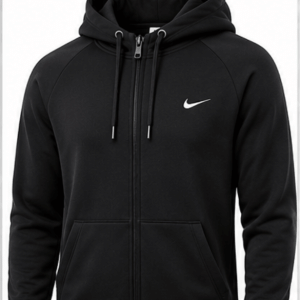
Nike Men’s Zipped Hoodie
₨ 3,500Original price was: ₨ 3,500.₨ 2,100Current price is: ₨ 2,100. -
Sale!
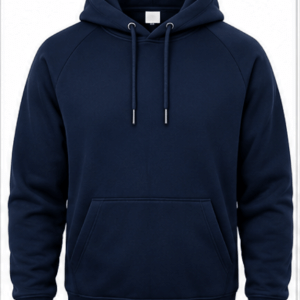
Men’s Oversized Hoodie
₨ 2,700Original price was: ₨ 2,700.₨ 1,999Current price is: ₨ 1,999. -
Sale!
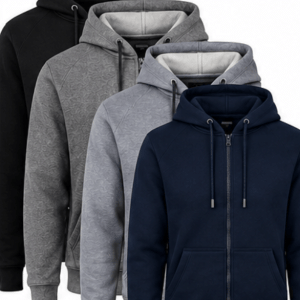
Pack of 3 Men’s Zipper Hoodie
₨ 9,999Original price was: ₨ 9,999.₨ 6,999Current price is: ₨ 6,999. -
Sale!
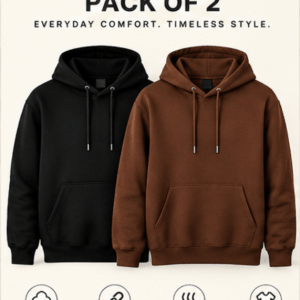
Pack of 2 Basic Hoodies
₨ 8,000Original price was: ₨ 8,000.₨ 4,899Current price is: ₨ 4,899. -
Sale!
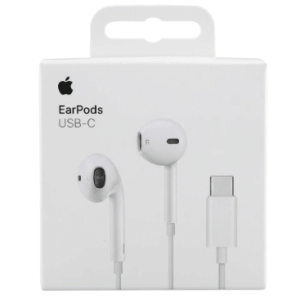
Apple Type C Handfree
₨ 1,999Original price was: ₨ 1,999.₨ 1,599Current price is: ₨ 1,599.