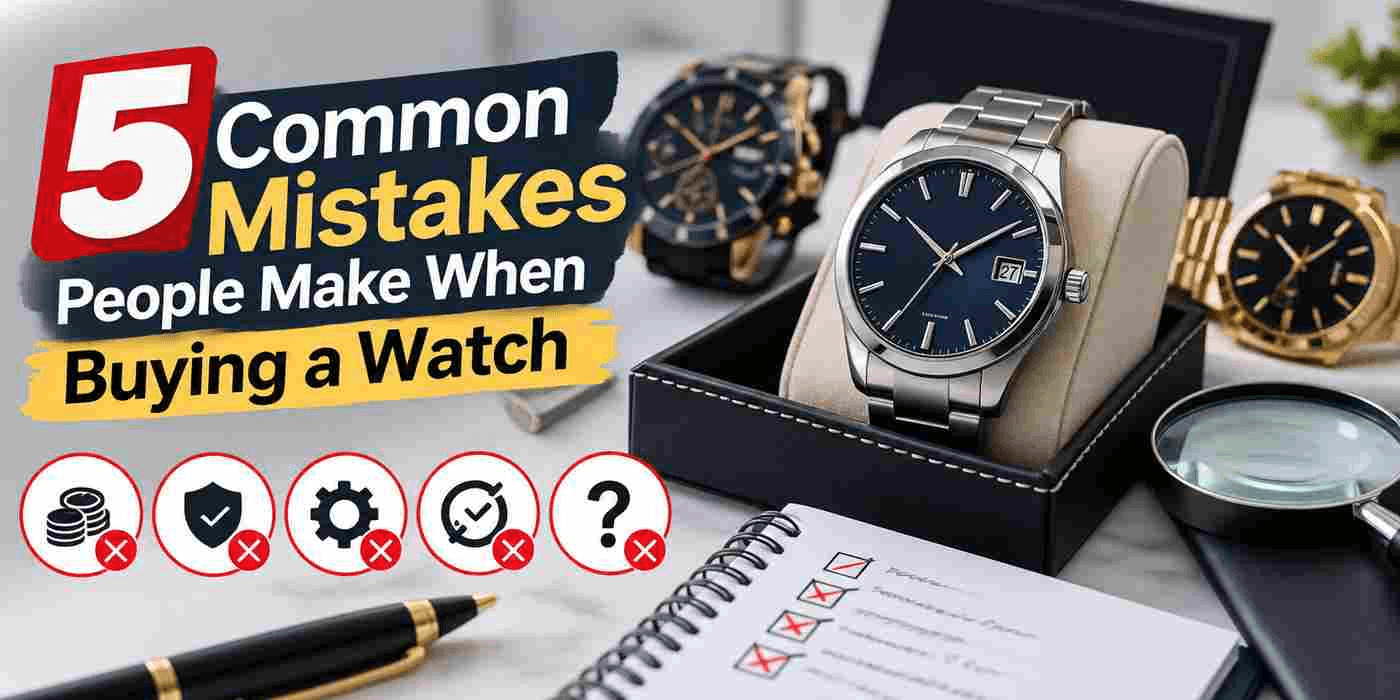
5 Common Mistakes People Make When Buying a Watch
Buying a watch feels simple right up until you actually try to do it. Scroll through enough listings and everything starts to blur together — dials, straps, price tags, vague spec sheets that don’t really tell you much. Most people end up picking based on a photo and a gut feeling, then find out a few weeks later that the strap’s already cracking, or that “water resistant” watch fogged up after nothing more than a light drizzle.
Honestly, none of that comes down to bad luck. It’s almost always one of the same five mistakes repeating itself. Here’s what they are, and what’s worth checking instead.
Quick Answer Short version: the biggest mistakes are judging a watch by its photo alone, ignoring the strap material, skipping water resistance checks, trusting a brand name over the actual listing, and expecting a budget smart watch to perform like a mid-range one. Get those five right, and most of the disappointment just goes away.
Mistake 1: Judging the Watch Only by Its Dial Photo
A good product photo is easy to fake — or at least easy to flatter. Lighting, angle, a bit of editing, and suddenly a plastic case looks like brushed steel. Relying on the picture alone is how that trick works on people.
What actually matters sits underneath the photo — case material, glass type, movement. A listing that plainly says “analog quartz with mineral glass” tells you more than ten glossy photos put together. And if a listing skips those details entirely? That’s usually worth treating as a small red flag, not an oversight.
Mistake 2: Ignoring Strap Material Until It’s Too Late
Most buyers pour all their attention into the dial and next to none into the strap, even though the strap’s the part actually touching skin all day. Leather looks sharp in photos, sure, but it dries out and cracks faster than people expect once real heat and humidity get involved. Cheap synthetic straps tend to feel stiff and can irritate skin over long wear too.
Stainless steel and decent silicone generally hold up better day to day — especially if you sweat a lot, or wear the same watch daily instead of rotating a few. Strap material’s worth checking before price, not after you’ve already paid.
Mistake 3: Skipping Water Resistance Checks
“Water resistant” gets thrown around loosely, and it doesn’t always mean the same thing from one listing to the next. Some watches shrug off rain or splashes fine. Others start fogging up after almost nothing. People who skip this check are usually the ones surprised the first time their watch gets caught in a light shower.
If a listing doesn’t clearly state a resistance rating, it’s safer to just assume the watch shouldn’t go near water at all. Asking the seller directly beats guessing.
Mistake 4: Trusting the Brand Name Over the Actual Listing
A recognizable name feels like a shortcut to quality, but it isn’t one on its own — especially with resellers and marketplace listings, where the same brand name can end up stamped on very different builds. Two watches carrying the same name can still differ quite a bit in movement quality, glass, and finishing.
Comparing actual specs and seller reputation is generally the safer move, rather than letting a name settle it for you. A lesser-known brand with honest, clear specs often beats a big name attached to a vague listing.
Mistake 5: Expecting Budget Smart Watches to Perform Like Mid-Range Ones
Smart watches under a certain price cut corners somewhere, and it’s almost always battery life or screen quality. Buyers sometimes expect the same smooth experience as a mid-range or flagship model, then get frustrated when the battery drains fast or the screen looks washed out in sunlight.
If notifications and basic tracking are really all you need, a budget smart watch can still work fine. Just walk in with realistic expectations about what that price actually buys — it’s not going to match something several times the cost.
How to Avoid These Mistakes
- Read the full specification list before looking at photos, not after.
- Check the strap material and think about how it’ll hold up in daily heat and sweat.
- Look specifically for a stated water resistance rating rather than assuming one.
- Compare actual specs across sellers instead of relying on brand name alone.
- Set realistic expectations for smart watch features based on the price bracket.
Why Buy Your Watch from kunshop.pk
kunshop.pk lists watch specs upfront instead of leaning on vague marketing language, which makes it a lot easier to sidestep most of the mistakes above before you’ve even added something to cart. Orders come with nationwide cash on delivery, free delivery on orders above Rs. 2,000, and a 7-day return window if the watch just doesn’t turn out the way you expected.
Shopping for a full look rather than just a watch? The clothing category is worth a browse too, since outfit and watch style tend to go hand in hand. For anything you’re unsure about — strap material, water resistance, sizing — WhatsApp or call support is there to confirm before you order.
Frequently Asked Questions
1. What’s the single biggest mistake people make when buying a watch online?
Judging the watch purely by its photo instead of reading the actual specifications listed underneath it.
2. Does a bigger, more detailed dial mean better quality?
Not really — dial design is mostly about style, while build quality comes down to case material, glass type, and movement.
3. How do I know if a watch is actually water resistant?
Look for a clearly stated resistance rating on the listing, and if it’s missing, it’s safer to assume the watch shouldn’t be exposed to water.
4. Is it safe to buy a lesser-known watch brand?
Often, yes — a lesser-known brand with clear, honest specs can be a safer buy than a recognizable name attached to a vague listing.
5. Are budget smart watches worth buying at all?
They can be, as long as you’re expecting basic notifications and tracking rather than the battery life and display quality of a mid-range smart watch.