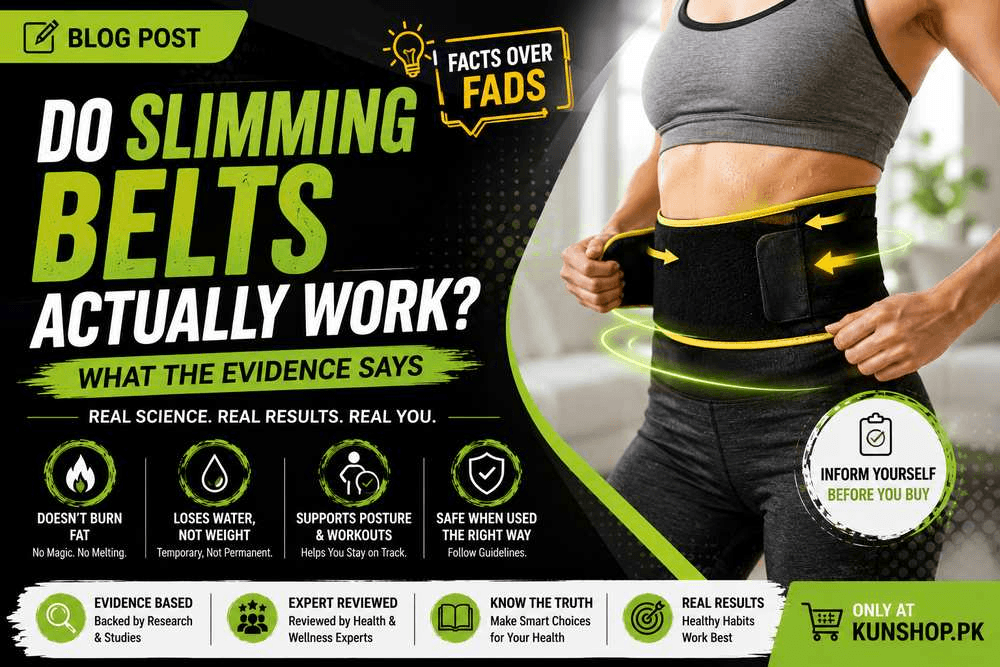
Do Slimming Belts Actually Work? What the Evidence Says
Reviewed by the KunShop.pk Health & Wellness Editorial Team
Scroll through fitness ads in Pakistan for five minutes and you’ll run into one — a slimming belt, promising a flatter stomach by the weekend. Wrap it on, sweat buckets, watch your waist shrink. Simple, right? Except it isn’t quite that simple. Do slimming belts actually work? Mostly no, not the way the packaging says. What you’re seeing when the tape measure shrinks is water and compression doing their thing, not fat actually leaving your body. Worth unpacking why, because the mechanics here matter a lot more than the marketing copy. If you’re weighing one up anyway, browsing the Slimming Belts collection on kunshop.pk first is a reasonable place to see what’s actually out there before you buy — or start from the KunShop.pk to browse everything else on the site.
Quick Answer: Slimming belts don’t burn fat. They trap heat and compress your midsection, which causes temporary water loss and a smaller-looking waist — an effect that disappears once you rehydrate. For lasting fat loss, a calorie deficit and regular exercise remain the only approaches backed by real evidence.
What Is a Slimming Belt and How Does It Work?
Strip away the branding and a slimming belt is just a stretchy wrap, usually neoprene, that does two jobs at once. It squeezes your midsection, and it traps body heat so you sweat more than you would otherwise. That’s genuinely it. No hidden fat-dissolving tech, whatever the product listing implies.
Some versions throw in vibration motors or mild electrical stimulation and call it “muscle toning.” Sounds more advanced. Doesn’t change the underlying physics one bit. One example is a Vibrating Slimming Belt, which layers vibration onto the same basic heat-and-compression setup.
Do Slimming Belts Actually Work?
Here’s what most product pages conveniently leave out. Medical News Today’s reporting on waist trainers — a closely related compression garment built on the same premise — found no real support for the fat-loss claims, only a temporary reduction in waist appearance. Slimming belts work on the same underlying principle, so the same limitation applies. What you actually get is a smaller-looking waist, driven by sweat and squeezing — not by your body torching stored fat.
Put one on during a workout, and sure, the tape measure will read smaller right after. Wait an hour, drink some water, and that number creeps right back. Sports-medicine and nutrition sources that have looked into compression belts and waist trainers, including a detailed breakdown from Fitelo, keep landing on the same conclusion: cosmetic, temporary, gone by dinner.
Why the Results Don’t Stick Around
That shrunken waist you see right after a session comes down to two things happening at once. First, fluid is leaving your body through sweat — that’s your water weight, and it can shift by a kilogram or more depending on hydration and sodium intake alone. Second, the belt is physically pressing your midsection inward the entire time it’s on, which shrinks the number on a tape measure without touching a single fat cell.
Neither mechanism reaches the fat stored under your skin or around your organs. Rehydrate, take the belt off, and the “before and after” photo stops making sense. This is exactly why slimming belt marketing feels more convincing than it should — it’s mixing a real, visible effect (water loss and compression) with a claim it can’t actually deliver (fat loss).
Why Do You Sweat More While Wearing One?
Trap heat against skin, and skin temperature climbs. Your body does what it always does when it gets hot — sweats to cool off. A slimming belt is basically a tiny, portable sauna strapped to one part of you.
Does sweating burn fat? No — not directly, anyway. Sweat is water and electrolytes leaving your body to manage temperature. Fat loss happens through a calorie deficit, a completely different process that slimming belt marketing loves to blur together with sweating.
Do Slimming Belts Burn Belly Fat?
Probably the question people search most, so here’s the straight answer: no. Slimming belts don’t burn belly fat, and honestly, no wearable device targets fat loss in one specific spot. Researchers call this spot reduction, and it’s been tested and challenged repeatedly — your body pulls stored fat from wherever it wants, not from wherever you’re squeezing.
Wearing a belt during exercise might make the workout feel harder because you’re hotter and sweatier. The calories you’re actually burning, though? Those come from the exercise, not the belt sitting on top of it.
Slimming Belts vs Waist Trainers — What’s the Difference?
Waist trainers tend to be stiffer, often boned like an old-fashioned corset, meant for hours-long wear under clothing to reshape the waist temporarily. Slimming belts are looser and flexible, built around heat and sweat, usually worn just during a workout. Different design, same ceiling — neither one reduces actual body fat, and both stop working the moment you take them off.
Potential Benefits of Slimming Belts
None of this means the product is pointless. It’s just not a fat-loss tool, and once you stop expecting it to be one, a few real upsides show up.
- Posture support: The compression can remind you to sit and stand straighter while it’s on.
- Temporary slimming effect: Before a wedding, a shoot, or a night out, that short-term waist reduction can be exactly what someone’s after — a lightweight option like a Hot Shaper Belt is usually enough for a few hours of wear.
- Motivational boost: Wearing one during a workout sometimes makes people more aware of their core.
- Warm-up aid: The trapped heat can loosen the abdominal area slightly before you start exercising.
- Sweat as a signal: Not scientific, but plenty of people use visible sweat as a rough gauge of workout effort.
Possible Risks and Side Effects
This is the part most listings quietly skip, so let’s not skip it.
- Skin irritation: Neoprene against sweaty skin for hours can trigger rashes, breakouts, or chafing.
- Dehydration: Sweating heavily without replacing fluids leaves you lightheaded, especially during Pakistan’s hotter months.
- Overheating: Trapping heat over your core for too long raises the risk of heat exhaustion, particularly outdoors.
- Restricted breathing: A belt cinched too tight can press on your diaphragm and make deep breaths harder.
- Digestive discomfort: Steady pressure on the stomach area can bring on bloating or acid reflux for some users.
Are Slimming Belts Safe to Use?
Short, occasional sessions are generally low-risk for most healthy adults. The problems tend to show up with prolonged daily use — hours at a stretch, day after day — where dehydration and skin irritation become a lot more likely.
Who Should Be Extra Careful
A few groups should watch out in particular: anyone with heart conditions, high blood pressure, hernias, or digestive disorders, plus pregnant women. Skip it or check with a doctor first.
Signs You Should Take It Off
Feeling dizzy, noticing unusual redness or itching, struggling to take a full breath — any of these means take the belt off and rehydrate, no debate.
How to Use a Slimming Belt Responsibly
Decided to try one anyway, maybe just for that temporary slimming effect before an event? Fine — how you use it matters more than the belt itself.
How long should you wear a slimming belt? Most guidance sits around 20 to 40 minutes per session, ideally paired with light to moderate exercise rather than passive wear around the house. Longer doesn’t mean better here. It mostly just means more risk for zero extra benefit.
Drink water before, during, and after, since you’re pushing your body to lose fluid on purpose. Don’t sleep in it, and give your skin a break if it starts looking irritated. If skin irritation is a recurring issue, an Postpartum Support Belt for Women tends to sit more comfortably against skin than pure neoprene.
What Actually Helps With Sustainable Weight Loss?
This is really the point of the whole article. If you want a smaller waist that stays smaller, the tools that work are a lot less flashy than a belt — but they’re the ones the evidence actually backs.
A calorie deficit, eating somewhat less than your body burns, is what drives fat loss over time. Add regular exercise, a mix of cardio and strength work, and you’re hitting both sides of the equation — burning more, keeping the muscle you have. Waist circumference shrinks gradually as overall body fat drops. Not because you targeted it, just because that’s how the body eventually responds. For a fuller breakdown, see our guide on how to lose belly fat with diet and exercise.
Who Should Avoid Slimming Belts?
Pregnant women, anyone recovering from abdominal surgery, people with cardiovascular issues, and those prone to skin sensitivity or heat rash are generally better off giving these a pass. Not sure where you fall? A quick chat with a doctor beats guessing from a product description.
Shopping for a Slimming Belt in Pakistan
When shopping for a slimming belt in Pakistan, it helps to compare material, adjustability, and sizing rather than just picking whichever ad shows up first. kunshop.pk carries a range of health and personal care products for everyday use, including compression wear worth comparing side by side before you commit to one — the Body Shaper for Waist and Tummy Support is a good starting point for adjustable sizing.
Frequently Asked Questions
Can slimming belts reduce belly fat permanently?
No. Permanent fat loss needs a sustained calorie deficit, not local compression or a good sweat session.
Is it safe to wear a slimming belt every day?
All-day, every-day use isn’t a great idea because of skin irritation, dehydration, and breathing discomfort — short, occasional sessions are the safer bet.
How much weight can you actually lose with a slimming belt?
Almost none in terms of real fat — the number you see right after a session is water weight, typically well under a kilogram, and it comes back once you rehydrate.
Does a slimming belt work differently for men than for women?
No, the mechanism is identical for everyone — heat and compression cause temporary water loss regardless of gender, and neither burns fat any faster in men than in women.
What’s a better alternative to a slimming belt for losing belly fat?
A calorie deficit paired with regular cardio and strength training actually addresses fat loss, where a slimming belt only changes how your waist looks for a few hours.
Conclusion
Slimming belts aren’t exactly a scam — they do what they’re built to do, trap heat and squeeze your midsection. What they can’t do is burn fat or deliver the lasting transformation shown in the ads. Want one for a quick look before an event? Reasonable use case. Chasing real, lasting fat loss instead? Your time and money go further with diet and exercise.
If a compression accessory is still on your list, orders through kunshop.pk ship nationwide with cash on delivery, free delivery on orders over Rs. 2,000, and 7-day returns if something isn’t right. Browse the Slimming Belts collection on kunshop.pk to compare options before you buy.