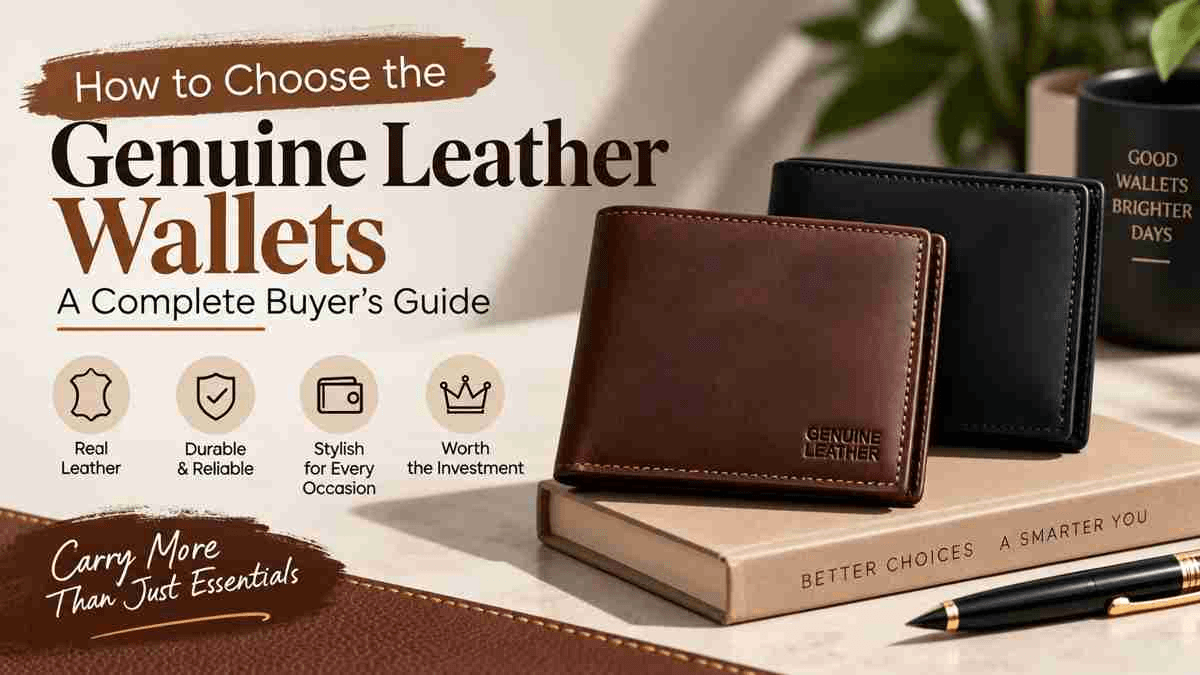
How to Choose the Genuine Leather wallets: A Complete Buyer’s Guide
A wallet is one of the things a man touches every single day.. Most men choose the first wallet that looks good on a shelf. That habit often leads to cards falling out a fold that cracks in six months or a bifold that’s too thick to fit comfortably in a pocket. Choosing the Genuine Leather wallets is not complicated once you split the choice into a few simple checks.
This guide goes through everything that really matters: how to know what you carry which Leather wallets type fits that, which material lasts and what a fair price is in Pakistan. By the end you will know what to look for before you spend your money.
Quick Answer: What Makes a Good Wallet?
The right wallet depends on five things working together not one “best” feature.
- Fits what you carry: Match the Genuine Leather wallets to the mix of cards, cash and ID instead of guessing.
- Material: Full‑grain or top‑grain leather usually outlasts PU and synthetic alternatives.
- Size for your pocket: A wallet that bulges in your pocket becomes uncomfortable quickly.
- Card and cash capacity: Plenty of slots, for cards and a note compartment that holds local currency comfortably.
- Solid stitching: Straight even seams usually mean the wallet will not fall apart within a year.
Why Choosing the Right Wallet Actually Matters
Think about how many times a day you touch your wallet — paying for lunch, showing your CNIC, pulling out a card at the till. It’s in and out of your pocket constantly, so a bad choice here isn’t a small thing. Cracked corners, a card that won’t stay in its slot, a shape that ruins how your trousers hang — all of it traces back to the wallet you picked.
And here’s what a lot of people don’t clock until later: buying cheap twice usually costs more than buying properly once. A synthetic wallet that falls apart in eight months, gets replaced, then dies again a year after that — add it up, and it’s often more expensive than one solid Genuine Leather Men’s Bifold wallets bought a single time.
Know What You Carry Before You Buy
Forget styles and brands for a minute. Just empty your current Genuine Leather wallets onto the table and actually look at what’s sitting there. Sounds too simple to matter, but this one step alone prevents most bad purchases.
How Many Cards Do You Carry Daily?
Two or three cards plus an ID? A slim wallet or cardholder covers you fine. But if you’re juggling five, six, seven cards — debit, credit, some loyalty card you forgot you had — you need a bifold or trifold with real slot count, not a minimalist design that’ll be stuffed to bursting by week two.
Do You Carry Cash Regularly?
Cash-heavy users need a proper note compartment, not just card slots. If you rarely carry cash and rely on mobile payments or cards, a slim wallet without a bulky cash pocket makes more sense.
CNIC, Licence, and ID: Where’s It Actually Going?
Most of us carry a CNIC, and sometimes a driving licence too, so a dedicated ID window is worth more than people give it credit for. Without one, you’re digging through random card slots every time a bank or the airport asks to see it — annoying every single time.
Types of Wallets and Which One Fits You
Once you know what you carry, matching it to a Genuine Leather wallets type becomes much easier.
Bifold Wallets:
Bifold wallets fold in half and are the most common style for a reason — they balance card capacity, cash storage, and a slim-ish profile. They tend to suit men who carry a moderate mix of cards and cash without wanting something too bulky.
Trifold Wallets:
Trifold wallets fold into three sections, which usually means more card slots but a slightly thicker overall shape. They can work well for people who carry a lot of cards and don’t mind the extra bulk in a jacket or bag rather than a trouser pocket.
Slim Wallets & Cardholders:
Slim wallets and cardholders strip things down to just a few card slots and sometimes a small cash section. They’re built for people who’ve moved mostly to digital payments and only need to carry the essentials.
Money Clip Wallets:
Money clip wallets hold folded cash securely with a metal or leather clip, often alongside one or two card slots. They suit front-pocket carry and tend to appeal to men who prioritize cash over cards.
Bifold vs Trifold vs Slim Wallet: Which Should You Choose?
If you’re stuck between these three, think in terms of trade-offs rather than a single “winner.” Bifold wallets generally offer the best balance of size and capacity for everyday use. Trifold wallets make sense when card count matters more than slimness, while slim wallets and cardholders suit anyone actively trying to carry less. There isn’t one correct answer here — the right pick depends entirely on your daily habits from the previous section.
Wallet Material Guide: Genuine Leather vs PU vs Synthetic
Material probably decides a wallet’s lifespan more than anything else on this list. Genuine leather — full-grain especially — ages nicely, picks up a bit of character over time, and holds its shape for years if you treat it half-decently. PU leather can look almost identical fresh out of the box, but give it a year or two of real use and it starts cracking or peeling at the edges. Fully synthetic options are usually the cheapest of the bunch, and that price comes with the shortest lifespan to match — no real surprise there.
How to Spot Quality Stitching & Craftsmanship
Check the stitching before anything else, honestly. Straight, even lines with nothing loose or fraying is a decent sign. Double stitching along the fold and card slot edges tends to survive daily wear a lot better than a single row does.
Wallet Size and Pakistani Currency Notes
Here’s something most buying guides — especially the international ones — completely skip over. Pakistani notes run bigger than currency in a lot of other countries, so a wallet designed with foreign bills in mind won’t always hold local cash flat. Before buying, it’s worth checking whether the cash compartment actually fits a standard Rs. note without an extra fold, because a compartment that’s just slightly too short means creased notes every single time you open it.
Features That Matter: Card Slots, RFID Protection & Coin Pockets
A handful of features make a real difference beyond size and material. Card slot count should roughly match what you carry — not ten empty slots you’ll never touch. RFID-blocking adds a layer of protection if you tap-to-pay often, though it’s not a dealbreaker if you don’t. A coin pocket helps if loose change is part of your day, but a lot of slim-wallet users skip it entirely since coins barely factor in anymore.
What Should You Actually Pay? Wallet Prices in Pakistan
Prices here cover a fairly wide spread, mostly driven by material and brand. Budget synthetic or PU wallets sit at the lower end, and honestly, that’s fine if you just need something to hold you over for a while. Genuine leather wallets from established sellers land in the mid-to-premium range, and that price is usually buying you stitching and material meant to survive years, not months. Exact figures shift depending on category, so it’s worth checking the live listings on KunShop.pk instead of treating any number here as gospel.
Mistakes People Keep Making When Buying a Wallet
- Buying it because it looks good in the photo: A wallet can photograph beautifully and still have weak stitching or a cramped cash pocket underneath.
- Not counting your own cards first: Grab a slim wallet while carrying eight cards and watch it refuse to close properly within a week.
- Trusting “leather-look” in the description: Sometimes that phrase quietly means PU, so it’s worth reading the actual listing instead of just the title.
- Forgetting about currency size entirely: A short cash compartment means folding notes constantly, and nobody wants to hand over crumpled bills.
- Chasing size over comfort: A trifold might look premium on a shelf, but it can feel like a brick in your back pocket by the end of a long day.
Quick Checklist Before You Buy:
- Count your cards and be honest about how much cash you actually carry day to day.
- Confirm it’s genuine leather if you actually want it to last.
- Check the cash compartment fits Pakistani notes without folding them.
- Look closely at the stitching, especially around the fold and slot edges.
- Pick the size based on where it’s actually going — front pocket, back pocket, or bag.
Why Get Your Wallet from KunShop.pk
KunShop.pk keeps bifold, trifold, and slim wallets in one place, so you can run through this checklist without bouncing between five different sites. Order before 3PM and it ships the same day, cash-on-delivery works nationwide, and delivery’s free once you cross Rs. 2,000. Every order comes with tracked shipping and SMS updates, plus a 7-day return window if the wallet isn’t quite what you pictured once it’s in your hand.
Frequently Asked Questions
Which Genuine Leather wallets is best for everyday use?
For most people, a bifold hits that sweet spot — decent card room, enough cash space, and a size that doesn’t feel bulky in the pocket.
Is genuine leather actually worth paying more for?
If you’re planning on using it for years rather than months, yes — it holds up noticeably better than PU over time.
How many card slots do I actually need?
Count what’s in your wallet right now and add one or two extra. A little spare room beats a wallet packed to the edge.
Do I need an RFID-blocking wallet in Pakistan?
It’s a nice extra if you tap-to-pay a lot, but it’s not something everyone strictly needs.
Why don’t some Genuine Leather wallets fit Pakistani notes properly?
Plenty of Genuine Leather wallets are built around currency sizes from other countries, so the compartment ends up too short for local Rs. notes, which run a bit bigger.
Final Thoughts
At the end of the day, choosing the right Genuine Leather wallets isn’t about hunting down “the best” one on the market — it’s about matching what you carry, the material, and the size to how you actually go about your day. Run through the checklist once, and everything else basically falls into place. You can browse Genuine Leather Bags & Wallets built around exactly this on KunShop.pk.